Wednesday, March 6, 2019

Entry 7 - First Graders Investigate the First Thanksgiving

Image result for first thanksgiving

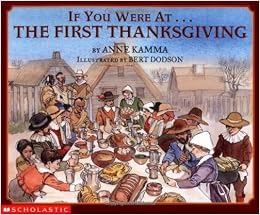
When I was reading the article I immediately thought about a book that I remember hearing in elementary about Thanksgiving. I could not remember the title so I wanted to grab this one since it looked familiar. My point though of the book is that sometimes I feel teachers just share basic knowledge about the pilgrims and Thanksgiving. I don't remember learning very much about them other than what they ate and how the dinner came to be. Like the Kindergarten article from last week, primary students are capable of doing so much. Having the students conduct research on what they ate at their first Thanksgiving and looking at the data is engaging for them. Then the teacher also had them think about what they eat themselves at that dinner so it connects back to them. It also starts to get them thinking about how the past is different from now. Not just with Thanksgiving but with other parts of history. While I did like that my teacher read the book I would have liked something engaging like this. Not just the simple explanation and coloring sheets. I think I would start with the book then lead into them starting their research on if the foods that were mentioned in the are accurate. That will get them to start developing the skill to question. 

Entry 6

I liked the idea that the Junior Detectives: Teaching with Primary Sources reading talked about. I think it is a great way to get students engaged in history and thinking. They get to play the role of a detective but also of a historian. Sometimes historians have to put pieces together with little evidence. They have to ask questions and search for answers. The students had to examine the sources, consider perspectives and make connections as well as a conclusion using the evidence. They gave students it seems primarily photographs with the person and date. I liked this because the students have to use their observation skills to solve the mystery as opposed to searching in the text for the answer. I remember growing up I liked learning about history but when it came to assignments they were easy. They really just consisted of sometimes searching for the answer in the text. The questions the teacher posed to the students I felt were good because it got them thinking without giving away the answer. They also could have led to a whole class discussion about what they think their job is or why they were imprisoned. It did not say their grade level but I would also think that this would help activate prior knowledge.

With Kindergarten I never thought of introducing primary sources. I think because I think its for older kids I never thought of it. After reading the article though if I ever am in a Kindergarten class I would definitely have them practice observing primary sources. Kids are so curious and observant at that age that they would really enjoy it and they would be engaged. I agreed with the fact that touching the images helps them make sense of everything. At that age I feel they need a lot of hands on to make connections. Not only connections, but their observations and what they think. I really enjoyed this article. It reminded me not to set limits on my students because of their age.

Entry 5 - Columbus and the Indians

This chapter made me wonder even more why historians who write textbooks for kids or even adults do not write the whole truth. We have children growing up thinking Christopher Columbus was a great explorer. We even have a day to celebrate him and primary grade teachers talk about him on that day. They just tell them what he did and how he found America. I feel like now I can't read a history book without thinking that what I am reading is biased. Towards the end of the chapter they talked about famous historian, Samuel Eliot Morison who wrote about Columbus in a book. They said that he mentioned the truth quickly about the mass murder. He did not lie but he just gave readers a quick view into the horrifying murder of thousands of Indians. The chapter even said it almost seems that it is unimportant to him to include. He wanted readers to think highly of Columbus because he felt he was a great man.

History shapes how we think, our values, and what we believe. They say history repeats itself but how can we learn from it if we may not be told the whole truth. As teachers, I think it is important that when we teach we set our opinions to the side. Part of teaching students to become critical thinkers is allowing them to form their own opinions. When we teach we need to allow for the opportunity of both sides to be heard. In the case of Columbus, I would want my students to understand Columbus's side of the story and the Indians side of the story. I like to think of this as an election. I want to hear want both candidates plan to do before I place my vote. So same with our students, they should hear both sides.

Entry 4 - Black Ants and Buddhists Chapter 7

After I read the chapter once I was not sure what I understood then after reading it a second time it clicked. The author was not writing for us to see how students are learning social studies but how to teach them history in a way where they connect with it. It does not necessarily have to be a text to self connect, but a connection that touches them. I liked the part about when the student could not believe that there were slave owners on our money. I had never really thought about it until I read it. It seems crazy to have people who were slave owners on our money. Like the teacher told him though, at that time it was common for rich, white men to own slaves. It was considered almost a norm for them to have slaves. They did good things for the country but they were also slave owners. That little section made me realize how even at such a young age these connections can be made. I feel like sometimes as teachers we try to protect them and not expose them to so much when they are young. They can handle the information though, as long as it is appropriate of course too. The first and second graders learned about the Native Americans and getting their land taken from them, then about slave owners. It was appropriate information for their age, but it let them understand the main picture which got them curious. They were making connections to even other parts of history.

I liked the part of Paulo Freire's quote when it says, "Students must play an active part in the learning process". This goes back to letting the students learn the truth and allowing them to connect. I feel like when they start making connections they gain a deeper understanding which leads to curiosity like the student with Jefferson. He found out he was a slave owner and asked how he could be a slave owner when in the Declaration of Independence he said all men were created equally. He knew what he meant in the Declaration and knew what it meant for slaves to be owned. After he processed the information and began to question why. I think as teachers no matter what we teach we should have a goal in mind that we want our students to make connections and question why something is the way it is.